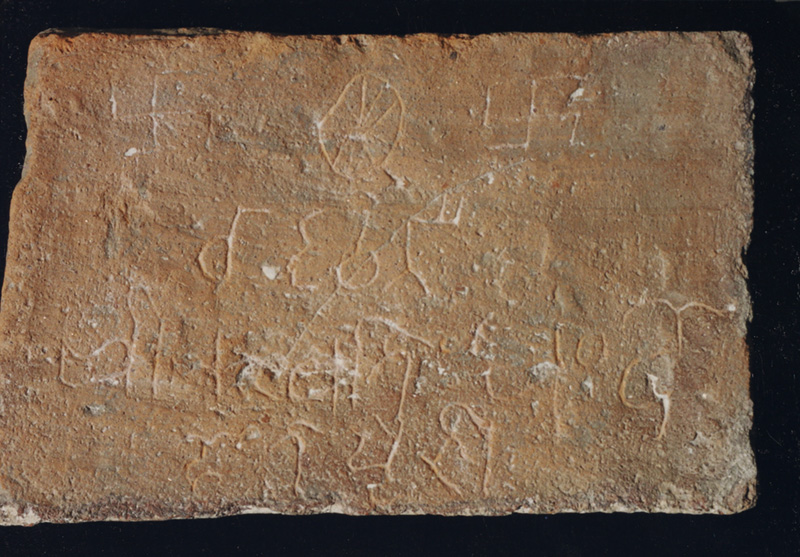

Post-Graduate Diploma in History and Philosophy
The Post-Graduate Diploma in History and Philosophy (PGD–HP) is a 30-credit, part-time programme designed to provide interdisciplinary training in historical inquiry and philosophical analysis. The curriculum is tailored to Himalayan and Southasian socio-ecological realities, aiming to prepare context-sensitive, professionally competent, and socially committed graduates while strengthening critical scholarship in the humanities.
Through its integrated focus on History, Philosophy, and their applications to society, technology, and environment, the programme contributes to qualitative improvement in interdisciplinary education in Southasia and serves as an academic pathway toward advanced postgraduate study.
Programme Highlights
- Morning Classes
- Part-time study
- Open to graduates from any undergraduate discipline
- Extensive Fieldwork and Lab Component
- Credit transfer option to MA in History and Philosophy (MAHP)
Key Information
- Credit: 30
- Duration: 1.5 Years (3 Semesters), Part-Time
- Class Schedule: 2 hours/day (Morning), 6 days/week
- Total Seats: 20
- Eligibility Criteria: At least 50% aggregate or CGPA 2.0 out of 4.0 in any undergraduate discipline from a recognised institution; or exceptional, demonstrable achievements considered equivalent
APPLICATION DEADLINE
19 MARCH 2026
Apply Historical and Philosophical Inquiry to Contemporary Challenges
The Post-Graduate Diploma in History and Philosophy (PGD–HP) is designed to equip students with the intellectual tools required to critically engage with contemporary social, political, cultural, technological, and ethical issues.
This programme enables students to integrate historical understanding with philosophical analysis in order to interpret complex realities, evaluate competing perspectives, and formulate well-reasoned arguments across diverse professional and academic contexts.
Through rigorous coursework, research training, and practical laboratory engagement, students will develop the capacity to apply historical and philosophical methods to real-world problems.
Under the guidance of experienced faculty and researchers, participants will:
- Critically examine contemporary debates in history and philosophy in relation to present-day global and Southasian contexts
- Develop advanced competencies in analytical reasoning, research design, academic writing, and scholarly presentation
- Engage with classical and contemporary theoretical frameworks across historical and philosophical traditions
- Undertake fieldwork and project-based inquiry integrating qualitative and quantitative approaches
- Apply conceptual and methodological tools to issues of personal, professional, and societal significance
Intended Participants
The PGD–HP is open to graduates from any recognized undergraduate discipline who wish to strengthen their critical thinking, research, and interpretive skills.
The programme is particularly suitable for:
- Academics and researchers
- Educators and curriculum developers
- Policy analysts and development practitioners
- Professionals in governance, civil society, media, and cultural sectors
- Individuals seeking interdisciplinary intellectual enrichment
No prior specialization in History or Philosophy is required. The programme provides a structured foundation while maintaining advanced academic rigor.
Build Credits Towards a Master’s Degree
This Post-Graduate Diploma is designed as an advanced academic pathway.
- MA in History and Philosophy (MAHP)
You can transfer the credits you earn in the PGD (HP) towards the Master’s degree qualification, subject to university regulations and approval.

- If you are seeking meaningful academic engagement and community-oriented learning grounded in rigorous historical and philosophical inquiry;
- If you wish to deepen your critical understanding of how Southasian societies have evolved diverse social, political, cultural, and economic formations over time;
- If you are interested in examining collective strategies, ideas, and practices that contribute to dignified lives and sustainable livelihoods in our region;
- If you recognize that societies in Southasia must respond thoughtfully to ecological and earth-system dynamics-shaped by the Himalaya, the monsoon, and broader environmental transformations-to remain sustainable and equitable;
- If you believe in the transformative and emancipatory role of higher education, where learning strengthens both personal intellectual growth and social responsibility, and contributes to addressing structural inequalities and emerging forms of marginalization.
The PGD–HP Programme actively encourages its students, through rigorous foundational study, reflective inquiry, and practical experimentation, to cultivate the following four central values:
1. Value of Transformative Learning
Education is meant to be more than the acquisition of knowledge, technical skills, or professional credentials. The PGD–HP programme encourages students to deepen their intellectual and personal growth, enabling them to reinterpret their experiences and transform their understanding of the world through historical and philosophical engagement.
2. Value of Inter-connectedness
Recognising that society, culture, environment, and technology exist within complex relational systems, the programme promotes enquiries that capture these interconnections in their historical depth and philosophical significance, appreciating their dynamic and evolving character.
3. Value of Authenticity
The programme fosters intuitive insight, critical self-awareness, and intellectual integrity so that students are able to think independently, articulate ideas clearly, and act with authenticity in academic, professional, and social contexts.
4. Value of Reflective Detachment
The PGD–HP programme seeks to cultivate the capacity for reflective detachment — the ability to critically distance oneself from assumptions and immediate positions — enabling balanced judgment, deeper analysis, and responsible collective engagement.
1. Analytical Engagement with Knowledge Materials
The Programme trains students to critically engage with a wide range of materials including historical documents, philosophical writings, policy texts, media narratives, statistical data, and lived experiences. Students will learn to:
- identify key questions, assumptions, and conceptual frameworks within a text or source;
- evaluate the reliability, limitations, and implications of evidence;
- interpret materials across cultural, temporal, and disciplinary boundaries;
- relate ideas to their socio-historical and intellectual contexts;
- develop the ability to synthesize diverse materials into coherent arguments.
2. Development of Critical and Conceptual Clarity
The Programme seeks to strengthen students’ intellectual discipline and conceptual precision by enabling them to:
- recognise the difference between opinion, interpretation, and argument;
- formulate clear and logically structured responses to complex issues;
- understand how historical processes and philosophical reasoning shape social realities;
- approach debates with openness to multiple perspectives;
- cultivate reasoned judgment grounded in evidence and analysis.
3. Applied Research Competence
Through coursework, field-based assignments, and the thesis component, students are supported to:
- design focused research questions relevant to contemporary Southasian contexts;
- apply appropriate qualitative and introductory quantitative methods;
- integrate theoretical understanding with practical inquiry;
- present research findings in academically sound formats;
- uphold ethical responsibility and contextual sensitivity in research practice.
4. Transferable Professional Capacities
The Programme prepares students with skills applicable across academic, public, and professional sectors, including:
- structured academic and policy-oriented writing;
- effective oral communication and moderated discussion;
- collaborative project work and independent initiative;
- critical engagement with social, technological, and environmental issues;
- the ability to translate complex ideas into accessible public discourse.
- A minimum of 50% aggregate marks or CGPA 2.0 on a 4.0 scale in any undergraduate discipline from a recognised institution; or
- Exceptional, demonstrable, and verifiable achievements in academic, professional, or community domains that may be considered equivalent to the above qualification under special recommendation.
- Successful performance in the Programme’s prescribed Entrance Examination and Interview Process.
- Total Seats: 20
- Duration: 1.5 Years (3 Semesters)
- Mode: Part-Time
- Class Schedule: Sunday – Friday
- Class Hours: 6:30 AM – 8:30 AM
- Admission Cycle: Applications are invited as per the University’s approved academic calendar.
- Conditional Offer: Available for applicants who are in the final stage of completing their undergraduate degree, subject to submission of required documents within the stipulated deadline.
The PGD (HP) curriculum includes foundational courses in History and Philosophy, applied projects, and experiential modules such as fieldwork and labs. The programme is guided by the following core principles:
- Rigorous training in historical and philosophical analysis
- Development of critical comprehension, reasoning, and articulation skills
- Engagement with community and real-world contexts
- Academic freedom, reflective practice, and periodic review
- Continual assessment through task-based and interactive pedagogy
The thematically structured curriculum enables students, faculty, and experts, from Southasia and beyond, to explore, share, and articulate knowledge across historical, philosophical, and societal contexts. Fieldwork, lab-based experimentation, and interdisciplinary projects equip students to address real-world issues and challenge conventional assumptions in humanities education.
Fieldwork & Labs
The History and Philosophy Lab (HPLB 505) introduces students to practical, hands-on engagement with historical and philosophical inquiry. Through this experimentation module, students:
- Formulate, test, and extend historically grounded and philosophically informed approaches to contemporary societal challenges
- Gain practical insights through field-based exercises, case studies, and applied projects
- Participate in three weeks of intensive fieldwork outside the campus, engaging with communities to develop critical and contextually relevant historical and philosophical questions
This experiential learning strengthens students’ ability to link theoretical frameworks with practical outcomes and enhances their capacity to contribute meaningfully to society.
Semester I (First Year)
| Subject Code | Course Name |
|---|---|
| HPFH 501 | Foundations of History (3 Credit) |
| HPFP 503 | Foundations of Philosophy (3 Credit) |
| HPLB 505 | History and Philosophy Lab ( 3 Credit) |
Semester II (Second Year)
| Subject Code | Course Name |
|---|---|
| HPTR 511 | Theory, History and Philosophy ( 3 Credit) |
| HPTN 512 | Quantitative Strategies ( 3 Credit) |
| HPPR 513 | HP Field work/Project (6 Cradit) |
Semester III (Third Year)
| Subject Code | Course Name |
|---|---|
| HPMT 618 | Thesis ( 9 Credit) |
- Total Credits for Graduation : 30
Semester I
HPFH 501 Foundations of History (3 credits)
A. Sources and Methods (12 hours)
This module provides a general overview of the kinds of historical sources that survive across the region. It discusses the site, the material, the production, the preparation, the text of the sources and their comparative spread and present-day availability. With the help of specimens we will analyse the implications of different kinds of sources for history and for our understanding of history.
Focus: General understanding of the meaning of source and significance of source diversity in history, assessment of the nature of individual source materials with focus on their tangible properties and how these properties influence their role and place in historical narratives, along with a general awareness of various methods of source criticism, and source repositories across space and time in and about Southasia.
B. Interpretations and Arguments (12 hours)
Through case based discussions, this module demonstrates the flexibilities inherent in historical interpretations and arguments. Taking our knowledge on sources from the first module as collateral, it exhibits the existence of different kinds of interpretations around a particular source, and subsequently, to the variegations in the construction of arguments, counter-arguments and reconciliatory resolutions. We learn to transliterate and translate sources, to compare and check the accuracy of transcriptions, and further, to critically trace the manner of incorporation of sources into building historical narratives and their limits.
Focus: Critical approach to the construction of interpretations and arguments and to the assessment of the affinity between sources and their interpretations, understanding the limits to such interpretive and argumentative constructions, awareness of the discursive nature of argument constructions and their real world implications, and attention to the availability of multiple standpoints in interpretive disciplines.
C. Imagination and Theories (12 hours)
This module explores the crafting of historical imaginations, through various forms of (non)narratives, and through theories regarding the past on the basis of historical evidences. For instance, the linear approach to history based on evidence arranged in accordance with universalizing forces versus episodic histories based on evidence as fragments. We analyse the relation between historical evidence and theory building and the processes of imaginations and re-imaginations according to availability, additions and revisions in evidence.
Focus: Critical evaluation of dominant theories about history and historical processes from marginal and non-historical standpoints; significance of evidence for historical imagination and theory; awareness of the genesis, growth, amendment and decline of imaginations, ideas, theories; revisions and contestations to dominant ideas and theories in light of emerging evidence.
D. Crafts and Practices (12 hours)
This module examines the craft and practice of history writing taking select historians (broadly understood as people bringing the awareness about past in the present) in and about Southasia as cases; an intensive study of their life and work with reference to dominant ideas, events and contemporaneous individuals, the correlation between these and the practice of history. We explore the connections between evidence, agency, ideology and practice in order to understand the extent to which the historian is and is not a representation of her time.
Focus: Contextualise historians’ craft and practice; adopt a critical case based evaluation of chronology, individual and collective representations and influence of traditions on historians’ works; adopt a historical and philosophical approach to personal, collective and social biographies; appraise imaginations and theories in relation to craft and practice.
Essay 1
Choose one of the topics above and write an essay that critically analyses a specific problematic issue related to sources and methods, interpretations and arguments, imaginations and theories or crafts and practices.
HPFP 503 Foundations of Philosophy (3 credits)
A. Text and Context (12 hours)
This module explores on the work of a leading philosopher from or relevant to Southasia, taking key texts as the basis from which issues such as objectivity, evidence, interpretations are discussed. The aim is to study the social, political, economic, religious, emotional perspectives in which the philosopher proceeds or to re-embed ideas in philosophy into the context and to explore the pathways of interpretations, re-interpretations, translations while we remain anchored in key texts. The approach will be broadly socio-historical while the analysis will be hermeneutical.
Focus: Insights into key texts in philosophy by taking texts of one philosopher from or relevant to the Southasian life-worlds; differentiate its contextual roots from that of its subsequent interpretations; understanding the trajectories of fundamental questions in philosophy as imprinted on the select texts.
B. Doing philosophy (12 hours)
This is an exploratory, applied module on both inductive and deductive approaches (and their counterparts such as analogical and metaphorical paths) to philosophising as a vocation. Taking ‘fragments’ (such as a phenomenon, an event, a bundle of meanings) as the basis for discursive meditation and theory building, it examines the ways such fragments build into apparently cohesive principles and schemes. We will evaluate the appearance of general knowledge on both the claims to generality and knowing.
Focus: Case studies on ‘origins’ of philosophical thoughts in both Classical and non-classical philosophies relevant to Southasia; challenges in examining and comprehending properties, potentials and mappings of the fragments for generalisations and transcendental enquiries; the difference between empirical and theoretical; critical assessment of characters of induction and deduction as well as example, analogy and ellipsis and other unconventional thinking, reasoning and feeling processes.
C. Philosophical Methods (12 hours)
This module explores the historical (genealogy and archaeology) and philosophical (analytical and synthetical) methods in philosophy; studying the development of an idea over time and across horizontal branching or over time and across vertical layers as well as the representational or investigative nature of philosophical positions; analytical and dialectical methods and their aims and objectives as well as their roles in knowledge and meaning making.
Focus: Topological history of philosophical ideas such as axioms, problems, conjectures and solutions; varied foundations of knowledge claims and systems; philosophical methods from non-philosophy perspectives; relations between and among objects in the world, meaning making, distinguishing interpretations, categories, frameworks and principles.
D. Problems and solutions (12 hours)
This module explores the making and unmaking of philosophical problems and ways to build their (re)solutions as well as limits to such ways. It reassesses changing criteria and properties of defining philosophical problems and their resolutions, and thereby helps understand, for instance, how philosophies in one socio-historical milieu are taken as theologies or folk wisdoms in another. It is a preliminary exercise in developing critical perspectives on comparative research across philosophical traditions.
Focus: Examining problems in one of the Southasian philosophical traditions from the vantage of another, or comparing the treatments of a single (non)problem in two or more traditions, to understand significance, justifications and rationales developed within their unfolding;
Essay 2
Write an essay on the origins and development of a philosophical problem.
HPLB 505 History and Philosophy Labs (3 credits)
One project, field work/film-photograph-essay
This experimentation module brings concrete situations of history and philosophy, as are relevant to solve existing problems in Nepali and Southasian societies, to the fore and thereby helps students to gain practical insights into doing history and philosophy. It consists of eight experiments. The nature and aims of the actual experiments are subject to change, depending upon the availability of sources, interests of the students and expertise of the subject teacher, but broadly four of the experiments will deal with History courses and four will focus on Philosophy courses offered in the semester. For example, the experiments may include:
1. Making of ‘controversy’ in history and their resolutions (8 hours)
2. Variations in interpreting given time-series data (8 hours)
3. Working with philosophical fragments such as rituals and shaman songs (8 hours)
4. Design and implementation of an ethical dilemma (8 hours)
The Post-Graduate Diploma in History and Philosophy adopts a comprehensive and flexible evaluation system designed to assess knowledge, critical thinking, research skills, and practical application. Evaluation combines continuous assessment, practical work, and formal examinations.
Assessment Components
- In-Semester Assessment:
Includes class participation, assignments, essays, presentations, and laboratory/project work. - End-Semester Examination:
Formal written or oral examinations to assess understanding of theoretical and conceptual frameworks. - Fieldwork and Lab Reports:
Evaluation of applied research, documentation, and problem-solving skills in real-world or simulated contexts. - Thesis/Project:
Independent research demonstrating mastery of historical and philosophical methods, critical reasoning, and academic writing. - Other Approved Schemes:
Faculty may incorporate additional approved assessment methods such as peer review, publications, or practical exercises.
Grading System
| Grade | Grade Point | Marks (%) | Qualitative Meaning |
|---|---|---|---|
| A | 4.00 | 85–100 | Outstanding |
| A- | 3.70 | 80–84.9 | Excellent |
| B+ | 3.33 | 75–79.9 | Very Good |
| B | 3.00 | 70–74.9 | Good |
| B- | 2.67 | 65–69.9 | Satisfactory |
| C+ | 2.33 | 60–64.9 | Fair |
| C | 2.00 | 50–59.9 | Poor |
| F | 0.00 | Below 50 | Fail |
Evaluation Philosophy
- Encourages critical thinking and independent inquiry.
- Integrates theoretical knowledge with applied skills.
- Ensures continuous feedback and iterative improvement.
- Prepares students for advanced study or professional practice in historical and philosophical fields.
As a graduate of the Post-Graduate Diploma in History and Philosophy, you will be prepared to pursue a range of academic, professional, and community-oriented careers, including:
- Historian
- Philosopher
- Researcher
- Public Intellectual
- Policy Analyst
- Planner
- Diplomat
- Public Servant
- Journalist
- Art and Literary Critic
- Social Commentator
- Public Communicator
- Community Leader
- Academic
- I/NGO Project Specialist
- Social Activist
The PGD (HP) Programme provides dedicated and personalized student support to ensure academic growth, professional development, and well-being throughout the course.
- Faculty Mentorship: Upon admission, each student is assigned a faculty mentor who provides one-on-one guidance, academic counselling, and support in co-learning with peers both within and beyond the classroom. The mentor also helps students navigate research projects, fieldwork, and practical exercises.
- Academic Counselling: Structured guidance is offered to assist students in course planning, skill development, and mastery of historical and philosophical methods.
- Career Support: Students have access to career guidance, including support for internships, research opportunities, professional skill enhancement, and placements related to historical, philosophical, or interdisciplinary fields.
- Wellness and Personal Support: Professional counselling services are available to ensure that students’ time in the programme is stress-free, balanced, and rewarding. The aim is to foster a supportive, engaging, and intellectually stimulating learning environment.
- Peer Learning and Collaboration: Opportunities are provided for collaborative projects, co-learning exercises, and networking with peers, faculty, and external experts to enhance academic and professional growth.
For more information/consultation:
info@sihp.edu.np
+977 9763683887 (WhatsApp)